-
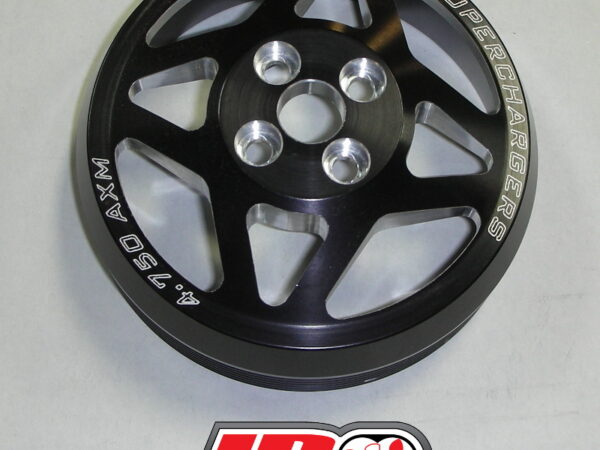 99-03 Chevy truck 4.75" Whipple pulley 2300 AXM
1 × $149.99
99-03 Chevy truck 4.75" Whipple pulley 2300 AXM
1 × $149.99
Subtotal: $149.99

Quality and Performance
99-03 Chevy truck 4.75" Whipple pulley 2300 AXM
1 × $149.99 Subtotal: $149.99
Quality and Performance
By Jon Bond
Have a self contained centrifugal supercharger with a mounted oil drain line? If you do, you should definitely read on.
About 25 years ago, ATI’s ProCharger brand, launched a self contained Supercharger with the lubricating oil contiained within the Supercharger. At this time, automotive engine bays were becoming smaller along with with the addition of safety and electrical components occupying space that was once open real estate under the hood. In an effort to keep aftermarket supercharger applications in production, manufacturer’s had to also work on finding creative mounting locations. The problem with oil injected models was that they had to have access to inject oil to the supercharger near the top, while also allowing gravity to drain back the oil into the crankcase at the bottom. On top of this, the drain line had to be above the oil fill level. The development of the self contained centrifugal supercharger allowed for more creative and compact installations that were once not possible.
Manufacturer’s such as Vortech, Paxton (now owned by Vortech), and many models of ATI’s ProCharger all produce various models of self contained superchargers across a wide HP band for street and strip applications. The concept is easy. Put a dipstick where an oil injector once was, and a capped off braided oil drain line below the supercharger, to make oil changes a breeze.
Whenever a new design comes out, new problems also surface. Enter the braided oil drain line. It isn’t the braided line that is the issue, but more of proper installation to the vehicle that leads to the problem. The oil drain line typically will hang down, close to the serpentine drive belt and rotational accessories. Drop in a unsecured or improperly placed oil drain line, and over time, the motion of the car stopping and going, turning left and right, and this oil drain ‘tail’ moves all around. Get to close to a rotating serpentine belt, and the belt will act like a belt sander, removing material a little bit at a time. Over time, it creates pin holes in the hose, allowing it to drip oil out of the supercharger. Since many of these self contained supercharger carry very little oil (for a reason), it does not take long before the oil level has dropped enough to damage bearings and seals. Once the supercharger indicates a noise to the driver from low oil volume, the damage is done. The driver is now obligated to a service procedure or replacement to solve the issue.
Look at the picture below. On this particular ProCharger application, the hose has been rubbed by a serpentine belt in 3 locations. The supercharger ran out of oil, rotated the bearings in the pockets, and became un-repairable.
As a repair facility, we see this often!

What is the fix?
The fix is simple. Replace damaged lines immediately.
Check supercharger oil levels. If your supercharger is using oil, identify why.
Check and secure oil drain lines with a hose retainer. Make sure the hose cannot become trapped in the serpentine belt and that is not rubbing on a rotation item such as an idler pulley.
When you are done changing supercharger oil, double check hose routing to be sure it was not disturbed.
Check back in 3 weeks. We will have an entire area dedicated to oil injector and drain lines as well as hose retainers. Secure those hoses and enjoy more miles out of your supercharger!